Sebastião Salgado: Genesis

terakopian's avatarPhoto This & That

The Unspoilt Planet

Sebastião Salgado: Genesis from Edmond Terakopian on Vimeo.

In 2004, Sebastião began the Genesis project, aimed at presenting the unblemished face of nature and humanity. Genesis consists of a series of landscape and wildlife photographs, as well as photographs of human communities that continue to live in accordance with their ancestral traditions and cultures, shot across 32 countries, over an eight year period. This body of work was conceived as a potential path to humanity’s rediscovery of itself in nature.

Sebastião Salgado’s photographic exhibition Genesis is unveiled for its world premiere at the Natural History Museum on Thursday 11 April (and will run until September 8th, 2013). Edited, designed and curated by Lélia Wanick Salgado, the exhibition includes 200 epic black-and-white photographs that celebrate the majesty of nature and examine the balance of human relationships with our fragile planet.

Accompanying the exhibition is an equally amazing

View original post 431 more words

Damien Hirst – Entomology Cabinets and Paintings, Scalpel Blade Paintings and Colour Charts

Just saw the Damien Hirst exhibition at White Cube Hong Kong today and was blown away by the paintings / installations. They had a sense of Jackson Pollack’s all-overness but in that meticulous Damien Hirst trade mark way. The pieces shown were vibrant and bewildering and strangely cohesive given the varied subject matter. The insects sort of looked like scalpels and the colour charts were vaguely reminiscent of the composition of the insect paintings. All three kinds of paintings were obsessively planned and executed to the n-th degree. Very enjoyable and definitely worth a visit.

Screen-shot-2013-02-28-at-12-16-04-PM

Heaven 2012 (Glass, steel and entomological specimens)

Screen-shot-2013-02-28-at-12-11-48-PM

Nessus 2009 (Entomological specimens on Hammerite paint)
Screen-shot-2013-02-28-at-2-18-27-PM

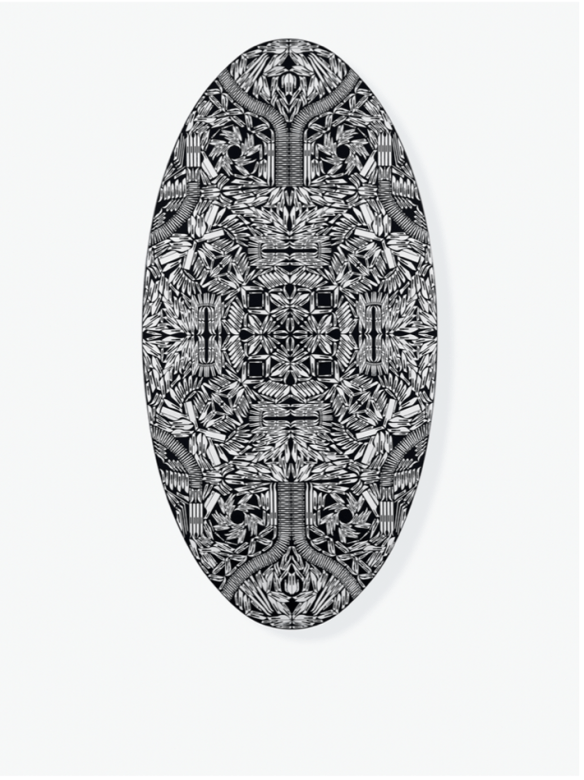
Quartet 2012-2013 (Scalpel blades and Hammerite paint on canvas)
Screen-shot-2013-02-28-at-2-26-38-PM

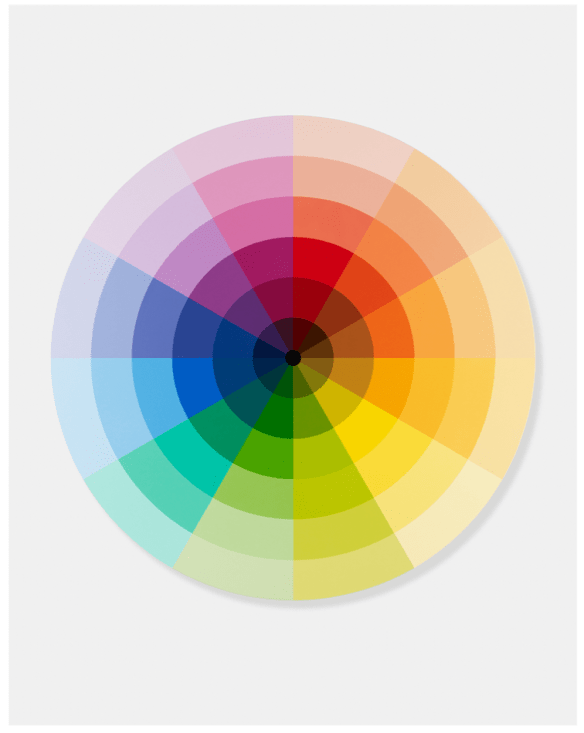
Monochromatic Sectors from Primary, Secondary & Tertiary Colour Ring, Dark Centre 2012 (Signwriting paint on canvas)

EXHIBITION PREVIEW (From the White Cube Website)

White Cube Hong Kong is pleased to present an exhibition of new work by Damien Hirst. This exhibition will feature cabinets and paintings from the ‘Entomology’ series, begun in 2009, as well as ‘Scalpel Blade Paintings’ and ‘Colour Charts’, which form some of the artist’s newest work. Hirst is known for his use of uncompromising materials to directly address profound and fundamental questions about existence and this exhibition furthers his investigation into such thematic dualities as life and death, desire and fear, beauty and horror.

The ‘Entomology Cabinets and Paintings’ employ one of Hirst’s most iconic and familiar motifs – the butterfly – and re-presents them interspersed with thousands of highly coloured insects and spiders. Hirst was drawn to them because, like butterflies, they embody the fragility of life, retaining an iridescent beauty even when dead. In the cabinets, beetles, butterflies and other insects are placed in precise, vertical or horizontal rows inside minimal and reflective, wall-mounted stainless steel frames. With each species arranged in separate rows, the overall effect is one of scientific ordering or industrial production. However, on closer inspection, this is undone by the slight mis-registration of their placement and small, subtle variations within each group. In the ‘Entomology Paintings’, Hirst has used similarly colourful insects in intricately patterned symmetrical compositions on Hammerite gloss paint. Like the cabinets, these vivid and colourful tableaux allude to both the opulent patterning and symmetry that exists in the natural world and to the ‘cabinet of curiosities’, or Victorian-era Natural History displays where decorative visual effect was as important as scientific categorisation. The ‘Entomology Paintings’ relate closely to Hirst’s earlier ‘Kaleidoscope Paintings’ – where thousands of butterfly wings were arranged on canvases shaped like gothic stained-glass windows – but are altogether darker in theme, alluding to zoological collections and titled after characters and locations from the Divine Comedy (c.1308-1321), Dante’s torturous vision of the underworld.

In the ‘Scalpel Blade Paintings’, Hirst continues his use of scientific and medical iconography, placing thousands of different types of scalpel blades in spectacular, mandala-like patterns. Some of these paintings are starkly monochromatic; their surfaces accentuated by the light that refracts off each carefully-angled blade, while others are intermittently layered with brightly coloured gloss paint, reminiscent of the psychedelic imagery and freedom of colour more associated with folk art. With the material transformation of a standard medicinal tool, these works relate to Hirst’s early instrument cabinets from the 1990s, in which thousands of precision-tooled surgical instruments were arranged in a formal and aesthetically pleasing manner, to create works whose beauty masked the inescapable futility of medicine in the face of our own mortality.

While both the ‘Entomology Paintings’ and ‘Scalpel Blade Paintings’ use assemblage and formal arrangement as their leitmotifs, the ‘Colour Charts’ rely on colour theory as the organisational tool for their compositions. Like Hirst’s infamous ‘Spot Paintings’, these works optimise the energy created by colour juxtaposition and employ a systematic approach to its application. Precisely executed in brilliant gloss paint, using primary, secondary and tertiary colours, these bold, Pop-like paintings harness the power of colour to create canvases with a vibrant energy and optical beauty.

Damien Hirst was born in 1965 in Bristol, UK. He lives and works in London, Gloucestershire and Devon. He has participated in numerous group exhibitions including ‘Our Magic Hour’, Yokohama Triennale, ‘The Luminous Interval’, Guggenheim Museum, Bilbao, ‘Modern British Sculpture’, Royal Academy of Arts, London (all 2011); ‘Pop Life’, National Gallery of Canada, Ottawa, Hamburger Kunsthalle (both 2010) and Tate Modern, London (2009); ‘Barock’, MADRE, Naples (2009); ‘Color Chart’, Museum of Modern Art, New York, Broad Contemporary Art Museum and LACMA, Los Angeles (all 2008); ‘Play Back’, Musée de la Ville de Paris (2007), ‘Re-Object’, Kunsthaus Bregenz (2007), ‘Into Me / Out of Me’, P.S.1 Contemporary Art Center, New York (2006), ‘In-A-Gadda-Da-Vida’, Tate Britain (2004), the 50th Venice Biennale (2003) and ‘Century City’, Tate Modern, London (2001). Solo exhibitions include ‘Cornucopia’, The Oceanographic Museum of Monaco (2010), ‘No Love Lost’, The Wallace Collection, London (2009), ‘Requiem’, Pinchuk Art Centre, Kiev (2009), ‘For the Love of God’, Rijksmuseum, Amsterdam (2008), Astrup Fearnley Museet fur Moderne Kunst, Oslo (2005), Museum of Fine Arts, Boston (2005) and ‘The Agony and the Ecstasy’, Archaeological Museum, Naples (2004). An exhibition of the artist’s private collection, ‘Murderme’, was held at Serpentine Gallery, London in 2006. He received the DAAD fellowship in Berlin in 1994 and the Turner Prize in 1995. In 2012, Tate Modern exhibited the most comprehensive survey of Damien Hirst’s work ever held in the UK.

“Miroslav Tichy” published by International Center of Photography and Steidl

Were Miroslav Tichy’s photographs intended to be the end result or were they just a part of his artistic process? On cursory examination they look like quick sketches one would do as studies for more laborious paintings. The fact that he used his pencil to outline and sketch over the photos suggest that this may have been the case. However, Tichy took far greater pains to acquire these images then necessary if a reference was all that was needed. This book published together with Tichy’s exhibition at the ICP effectively answers this and other questions regarding the enigmatic artist.

3-31

20130215-203833.jpg
3-8-18

20130215-205548.jpg
The book contains some thought provoking essays and a poem by Nick Cave called the “Collector” dated 2008. Here’s a quick preview of the essays in the book along with some on my own thoughts:

“What Happens When Nothing Happens” by Brian Wallace

Wallace sees Tichy’s work as a continuation of the surrealist movement in that he was “willing to engage viscerally and critically with the environment, in other words an amateur.” For Wallace Tichy was a flaneur in the tradition of Baudelaire, Benjamin and Breton. Like Breton’s book “Nadja” (which I bought recently in NYC but have yet to read) Tichy regarded the urban space as an erotically charged environment. However, Wallace goes on to conclude that unlike the amateur who strives to make clear and pristine images, Tichy’s photographs are anti-snapshots which are double exposed, blurred, and badly cropped. These photos are focused “on inconsequential details or gestures” and “begin to create a kind of lexicon of everyday communication that is scarcely ever recorded or understood.”

“The Artist With the Bad Camera” by Carolyn Christov-Bakargrev

This essay takes the anti-snapshot argument even further by suggesting that Tichy himself is the camera. Considering he took great pains to fashion and create his own clothing to look like an inconspicuous common laborer. Tichy also used homemade cameras that did not look like they even worked to the casual observer / subject. “So in his daytime derives in the town, his body took photographs: organic, biological photographs each an encounter and impulse toward life, each a moment marking the flow of time like the sand of an hour glass, each “take” proving to himself he was alive.” According to the author of this essay Tichy’s photographs look more “alive because you are aware of their materiality…because there is more space for the viewers’ projections and the activity of interpretation.”

“Velvet Revolution” by Richard Prince

In Prince’s essay, he takes a less formal approach but is more aggressive in asserting Tichy’s quiet revolt against the modernist endeavor and the social-political environment during his time. Prince writes: “What does Tichy believe in? Buttocks and Breasts, that’s my guess. The outline of a bra. And what is in a bra? Heaven, everything that matters. All the rest of it…the highways, the smokestacks, the poured concrete, the public housing…the intermittent electricity, the plumber that never shows up…it can all go away with a girl in a towel in the sun turning over and lifting an unshaved arm. Fuck the Cold War. The reincarnation of Georgia O’Keefe. That’s what we look for.” It is interesting to note that Tichy never had a serious relationship with any women and that his artistic career was interrupted by stints in political prison.

3-8-24

20130215-211228.jpg
3-8-264

20130215-211409.jpg
After this essay by Prince we are presented with Tichy’s photographic body of work. All works are printed at full scale. The numbers next to the photographs are the MT inventory numbers of the works in the catalogue of the Foundation Tichy Ocean. The photos run the whole gamut of posed and unposed portraiture from full body to tight head shots. They are of women of all shapes and sizes and age groups. The photos give the sense that they could have only been taken by someone who is familiar to those in the photos. Who over the years due to his persistent presence became part and parcel of the landscape. Maybe it was the use of his homemade telephoto lenses but even in the up close shots you never get the sense that he is interrupting. The relationship the artist has with his own work is ambiguous since the photos seem to be obsessed over and neglected at the same time. Tichy lovingly and compulsively created and decorated all the frames for his photos by hand. But most if not all of them look to have been discarded at some point. This maybe some what problematic since it calls into question Tichy’s intent. Perhaps it is informative that the publishers chose to include Nick Cave’s poem titled “The Collector” to follow the photographs.

“Miroslav Tichy: Tarzan Retired” by Roman Buxbaum

In this last essay and perhaps the most authoritative, Tichy’s long time friend and psychologist Roman Buxbaum gives us the insider story of the artist’s life. Buxbaum grew up with Tichy and remembers taking photos with a pin hole cameras Tichy taught him to make. We learn from Buxbaum that after the Soviets took over Czechoslovakia, the students at Tichy’s art school were forced to draw workers in overalls instead of the female models they were used to drawing. According to the author Tichy refused to draw the workers. Furthermore, we get details like how Tichy wanted to insure his homemade ragged coat for 100,000 czech crowns which was then the price of a luxury car. Buxbaum interprets these as acts of resistance against the prevailing regime. However Tichy may not have even cared enough to resist as he seemed quite happy going about doing his own thing.

4-41

20130215-212524.jpg
7-5-36

20130215-213834.jpg
It seems that after all his toils and tribulations in his life, Tichy was able to find a mode of expression that was unique to him. It was something unforced and came perfectly natural to someone like him living in his times. He no longer had to justify himself or his works to anyone so he could behave and act in accordance to his own will. Tichy was motivated and inspired by the one constant unchanging beauty that was around him: women. And how he saw them is how one would view a beautiful sunset or an idyllic landscape. The experience of this beauty in and of itself was all that Tichy needed and the photographic works were just a bi-product for him. Luckily for us we are able to also experience this beauty through Tichy’s dreamlike yet suprarealistic photographs.

10-1-180

20130215-213145.jpg
4-3-70

20130215-213318.jpg
4-6-94

20130215-213513.jpg
2-168

20130215-213656.jpg