Koyaanisqatsi

“Koyannisqatsi” is the first film of “The Qatsi Trilogy”. The film is directed by Godfrey Reggio with Ron Fricke and Philip Glass responsible for cinematography and musical score respectively.

image

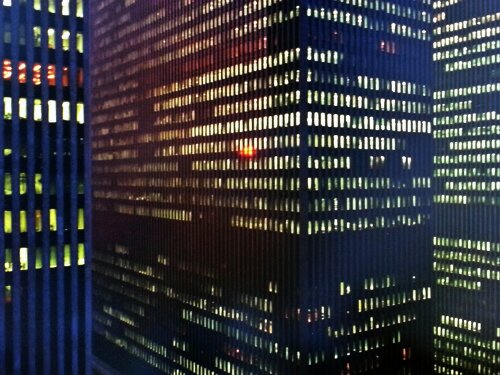
Ground breaking for its day, there is no plot or dialogue in the movie.   Koyannisqatsi consist entirely of synergistic music and imagery which is shot and played back in time lapse or slow motion.   The scenes range from the natural beauty of the Grand Canyon to the destructive power of the nuclear bomb to provide a breath taking critique on modern life which as the title suggest is a crazy and out of balance existence.

image

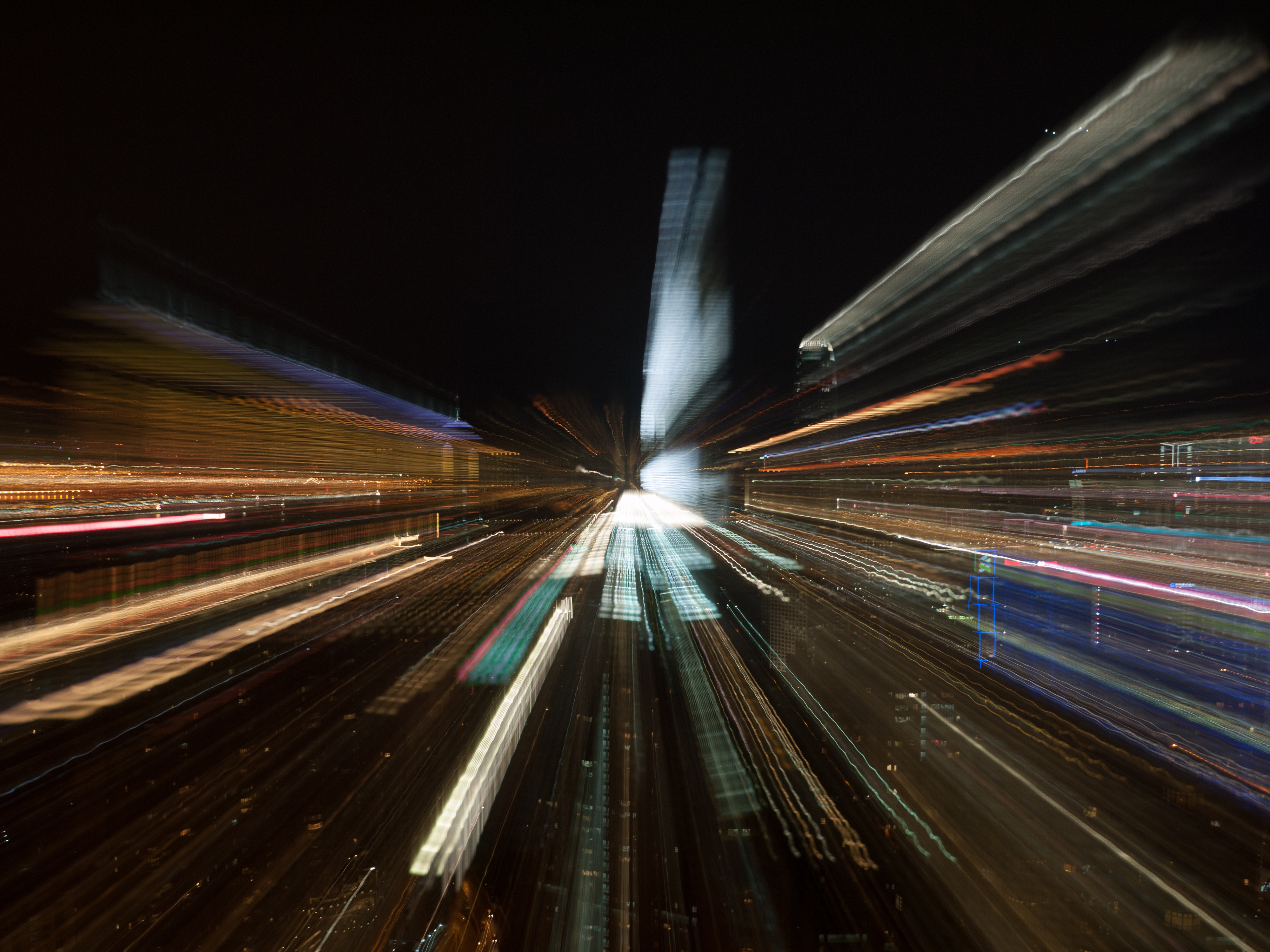
Some of my favorite montages in the movie include sequences from sausage making machines cutting to Grand Central escalators crowded with people at rush hour.  Or the ariel view of the city morphing into a microscopic view of computer circuitry.  These montages induce a hypnotic like trance in the viewer by going from slowmo to time lapse and back to slowmo all set to Philip Glass’ organically composed minimalistic musical score. 

The shots go from very formal composition such as the view of the stock exchange floor that has multiple exposures with ghostly trails of people going backwards and forwards in time.  To the handheld time lapsed street photography on the side walk.  The amount of fun the film makers had while making is translated directly to the viewing experience. 

image

Koyannisqatsi is a definite must see for all film and photography fans alike.  It will make you think twice about what exactly is important to you.  Godfrey believes that we are now living in the “host of technology” and freedom comes from knowing when to reject or embrace IT and not let IT determine how or when we use IT.  Looking forward to watching the other two films in the series and also seeing the director’s latest film “The Holy See”.
image

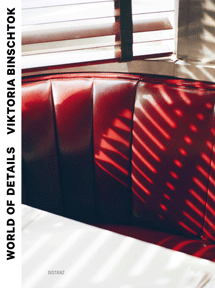
DISTANZ Verlag: Viktoria Binschtok “World of Details”

Photographs—Analytical and Emotional at Once 

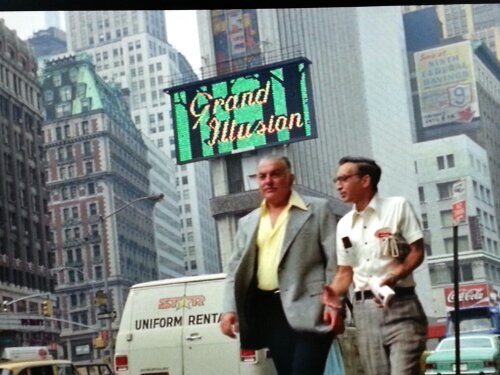
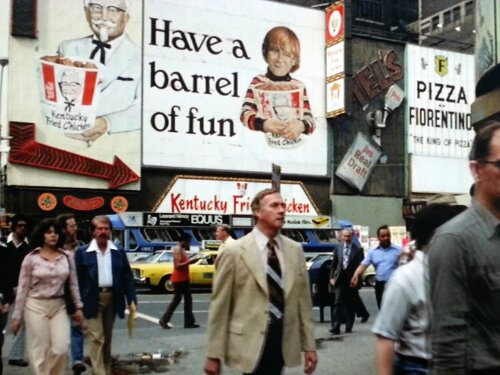
The photographic works of Viktoria Binschtok (b. Moscow, 1972; lives and works in Berlin) explore the idea of visibility. The artist uses surprising displacements of context to examine which contents are transmitted within the firmly defined boundaries of the picture and which exceed these boundaries, being a matter of our own knowledge. In addition to her own photographs, Binschtok accordingly avails herself of the Internet as a no less fertile source of visual material. In her most recent series, “World of Details,” Viktoria Binschtok combines analogue and digital imageries. She begins by selecting New York street scenes from the vast archives of Google Street View, and then travels to these places to take her own picture of the reality she finds there. The reference images render streetscapes from a distance; Binschtok, meanwhile, expands on details, counterbalancing the straightforward photographs taken by a programmed automatic apparatus with what ultimately distinguishes man from machine: intention. In “World of Details,” Viktoria Binschtok not only visualizes how we see the world; she also goes beyond documentary photography without relying on the expedients of staging.

With an essay by Matthias Harder.

via DISTANZ Verlag: Viktoria Binschtok.

Sebastião Salgado: Genesis

terakopian's avatarPhoto This & That

The Unspoilt Planet

Sebastião Salgado: Genesis from Edmond Terakopian on Vimeo.

In 2004, Sebastião began the Genesis project, aimed at presenting the unblemished face of nature and humanity. Genesis consists of a series of landscape and wildlife photographs, as well as photographs of human communities that continue to live in accordance with their ancestral traditions and cultures, shot across 32 countries, over an eight year period. This body of work was conceived as a potential path to humanity’s rediscovery of itself in nature.

Sebastião Salgado’s photographic exhibition Genesis is unveiled for its world premiere at the Natural History Museum on Thursday 11 April (and will run until September 8th, 2013). Edited, designed and curated by Lélia Wanick Salgado, the exhibition includes 200 epic black-and-white photographs that celebrate the majesty of nature and examine the balance of human relationships with our fragile planet.

Accompanying the exhibition is an equally amazing

View original post 431 more words