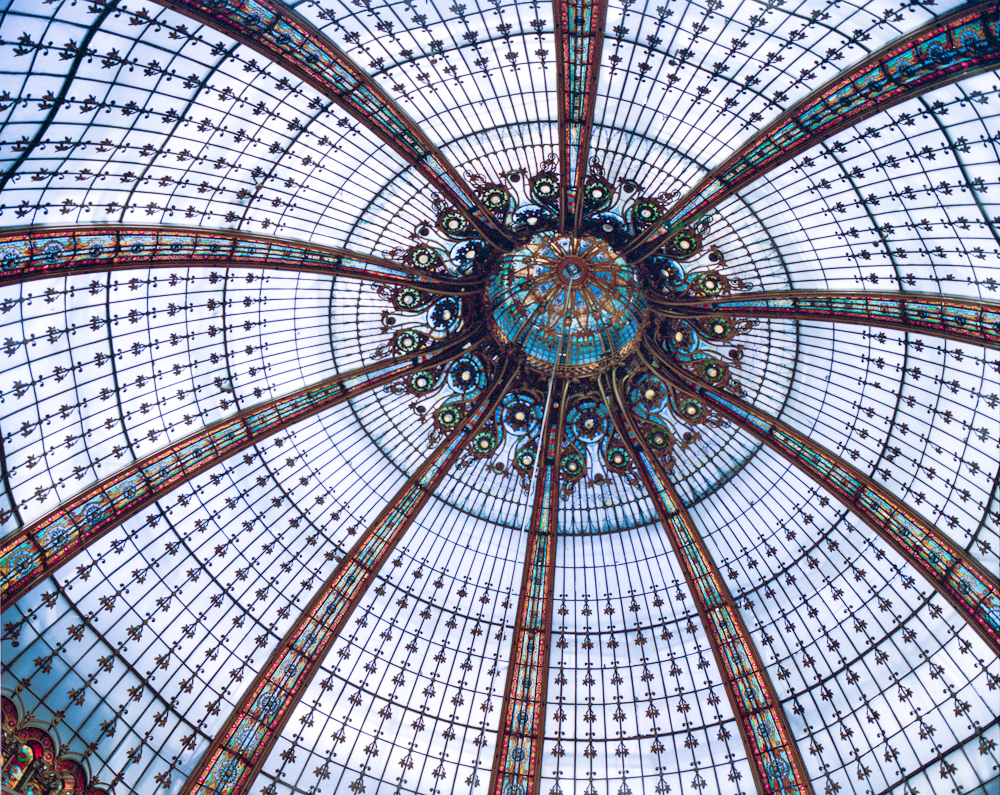
Spider of Light
Reply
This series is focused on getting hands on with photography by going back to the basics of manual focusing, manual exposure, black and white film processing and archiving. It’s a guide for those who are considering making or have already made an investment in a film camera and the associated gear and want to make the best use of it.

Black and white film development gear in action: final rinse with photoflo waiting to go!
First off, let’s try to answer the question why would anyone want to use a film camera in the age of the ubiquitous and ultra convenient iPhone. The simple answer is that a film camera slows you down and lets you appreciate the actual process of taking a picture. There are only 36-38 shots per a 35mm roll of film (less if you are using medium format) and the fact that you need to develop it yourself or take it to get processed means you’re going to think more before you click. This allows you to see in a different way which is not necessarily better, just different. The most unique thing about film photography is that the physical film becomes an artifact from the same time the image was captured.
The Gear
Contrary to popular belief, film and film cameras are very much alive and kicking. In fact the resurgence might ironically have something to do with all those iPhone photo apps that mimic the look and feel of different types of film. Currently there are about 21 small format and 17 medium format film cameras being produced and sold in quantity. There are three primary types of cameras: rangefinder, single lens reflex, and twin lens reflex. The brands are mainly Japanese and European and in some cases like Voigtlander collaborations between these two camera producing regions.
Here is a comprehensive but by no means exhaustive list of the film cameras being produced today:
35 mm Rangefinders
Personally I find rangefinders of all different formats to be the most beautiful cameras. There’s something about their simplicity and elegance that just beckons you to pick them up and start taking photos. Haptic perception when using rangefinders seems to be a lot higher than other camera types. The viewfinder lets you keep your eye constantly on the scene unlike single lens reflex cameras that block your view when the mirror flaps up. The popularity of micro 4/3 cameras and mirror-less digital cameras are directly inspired by these beauties. There are currently only three brands mass producing film rangefinders:
The M7 was my first rangefinder camera which I picked up in a used camera store in Tokyo. Tokyo has the largest collection of well preserved second hand Leica cameras in the world. It’s this respect for tradition that has enabled Japanese camera manufacturers to dominate the digital camera market and continue their innovations. I picked the M7 because it’s the most advanced film rangefinder produced to date. The aperture priority on the M7 is accurate and quite reliable when used in conjunction with the EV compensation dial. Some images on this blog taken with the M7 can be found here.

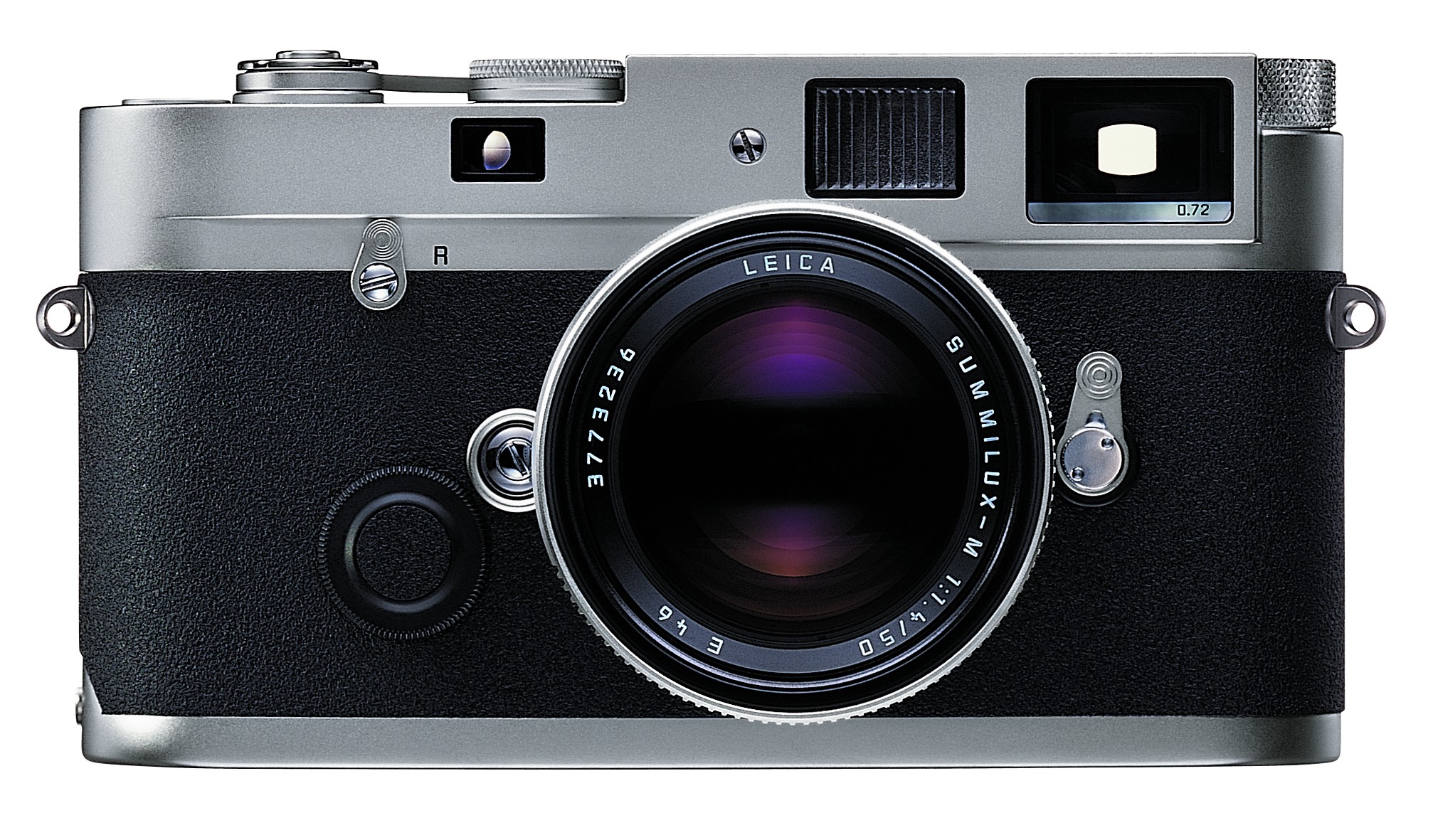
Leica MP
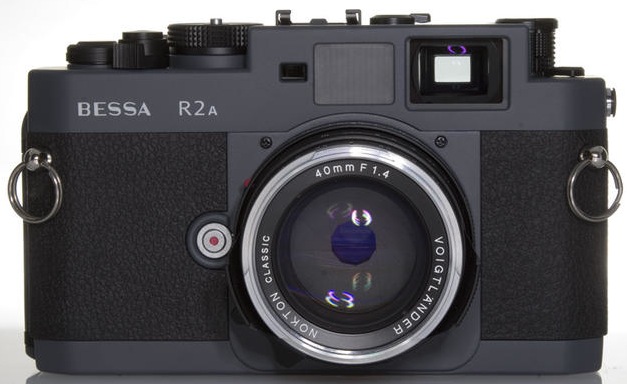
Voigtlander R2M

Voigtlander R2A
Voigtlander R3M

Voigtlander R3A

I also bought the R4M in Tokyo after trading in my Nikon SP. I found the SP too finicky to use and wanted something simple and light weight. More importantly, I wanted a camera to learn manual exposure so I picked the R4M. This camera can be used in fully manual mode by taking out the batteries to disable the internal +/- 2 stops light meter. Another equally unique feature is its internal viewfinder that supports 21mm wide angle lenses. These wide angle lenses usually require an external viewfinder. The R4M’s light weight and small form factor really enables the user to get into the nooks and crannies of buildings to capture photos with dramatic perspectives.
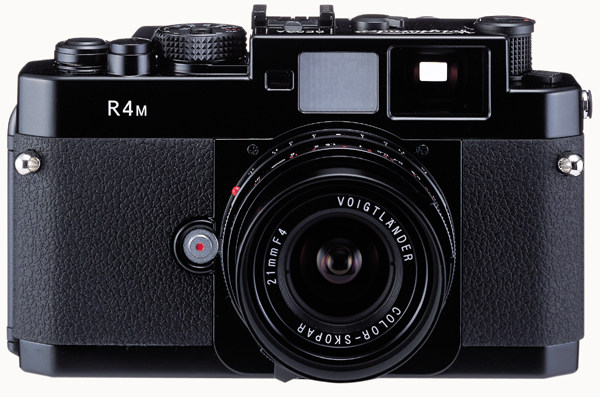
Voigtlander R4A

Voigtlander R2S / R2C

Carl Zeiss Zeiss Ikon

Carl Zeiss Zeiss Ikon SW

Please share your personal experiences with these cameras in the comments section! Thanks in advance for any and all contributions.


I bought this book to learn more about the famous Dusseldorf School of Photography. The book does a good job of reinforcing and dispelling some myths about the school. It consist mainly of large format printed photos and an essay titled “Photographic Emancipation” written by Stefan Gronert. The photos are divided into three parts: part one focuses on the school’s founding gurus Bernd & Hilla Becher; part two its more famous pupils; and part three its lesser known practitioners. There is a very well researched and comprehensive “Biographies, Exhibitions and Further Reading” section by Isabelle Matz and Maria Muller at the end of the book.
Stefan Gronert’s essay serves as a legend for the photos by covering the 11 approaches of “Photographic Emancipation”. Although Gronert doesn’t spell out these 11 approaches exactly one can assume they roughly follow his headings. These sections effectively sets up a dialogue between the artists. Gronert points out that it was Axel Hutte who first started to do portraits but Thomas Ruff and Thomas Struth who later became more well known for them. The author also compares and contrasts: the library photos of Candida Hofer with Andreas Gursky; and the street photos of Petra Wunderlich with Thomas Struth. Gronert seems to dedicate a special section to Thomas Ruff’s work due perhaps to his more diverse oeuvre.
The insights in Gronert’s essay adds more flavor to the photos. Some examples being Thomas Struth’s pictures of pictures or as Gronert refers to them as meta photos. These photos of paintings in museums (the bottom photo on the book’s cover) are given another dimension when you learn that each scene was methodically captured over and over until one image “fit the bill”. This according to Gronert gives the photos a much more authorial constructed reality. For me personally they look somewhere between staged and found. Jorg Sasse’s “Speicher I” is a photo-sculpture and image database system that allows the viewer to organize photos by themes. In this day and age of The Cloud it’s interesting to see how artist physically interpret these concepts.
The Photos
Here are some personal observations about the photos by the various photographers in the order they are presented in the book:
Bernd & Hilla Becher
In so much as the photos are seen to be reproductions of reality, the repetitive nature of the photos’ subject matter are also reproducing themselves as well. The repetition also encourages you to stop seeing the subject matter all together and start seeing the abstractions.
Andreas Gursky
By having AG follow B&HB’s work in the book helps to emphasize B&HB’s influence of scale on AG’s photos. This arrangement also helps to contrast the non-monumentality of AG’s photos when compared to B&BH’s . In AG’s photos it is the tableaux that becomes the monument. One of my favorite photos from this series is “Baharain I” for its “all over-ness” and abstraction.
Candida Hofer
In contrast to AG, CH’s focus is more on space and depth. There’s also a fractal thing going on in the photo of the room with boxes on the shelves alludes to the further subdivision of space in to smaller and smaller modules. He seems to use this compositional strategy quite frequently.
Axel Hutte
Perhaps it’s the influence of Gronert’s essay but AH’s work seem to contain the seeds of the work of his peers. There are fractal like spaces, deep voids, all over hill side/jungle foliages and icebergs, atmospheric environments, objects in far off distances.
First time in the book that portraits appear in the artists’ represented photos. And also one of the first to incorporate found “objects” (space photos, jpegs from the internet) in his photos shown in the book. As mentioned before TR’s photos cover a diverse range of subjects.
Thomas Struth
His work deals with the topic of public spaces in his museum photos and also private spaces in family portraits taken in homes. In the former the people are seemingly unaware of their presence in the photos whereas in the later there is a direct confrontation between viewer and subject. It’s interesting to see these polar opposites side by side in the book.
Petra Wunderlich, Laurenz Berges, Elger Esser, Simone Nieweg, Jorg Sasse
PW has a series of stone quarry and stone buildings which I like for their negative and positive spaces respectively. There’s an awesome photo by LB called “Delmenhorst” that has a snow laden tree against a blue wall that looks like a silkscreened sky. EE’s photos are very painterly and I particularly like the one of the ocean wave called “265 Dieppe”. Of all the foliage themed photos I think SN’s are the most successful. I particularly like “Garden Fence with Rug, Gelsenkirchen” which has an all-over and consistent feeling that is present in all her photos. Three photos from Jorg Sasse which I absolutely admire. There’s the photo of the yellow vase against a purple background that is very abstract and Escher-esque. The volcano and the butcher photos (actually two photos) for their texturing and patterns. And I also like the speeding train photo for the strong horizontal composition and color contrast.
Conclusion
The book serves as a good overall guide to the key figures of The Dusseldorf School. It’s a good starting point to help the reader explore more about the individual photographers. The book is also very effective at putting everything in context so that influences and offshoots can be seen more clearly. Most importantly it enables the reader to discover and appreciate the work of the lesser known students of the school.
Was initially too freaked out to take this photo but some how couldn’t resist at the same time. Do you ever get that feeling as well when taking pics?

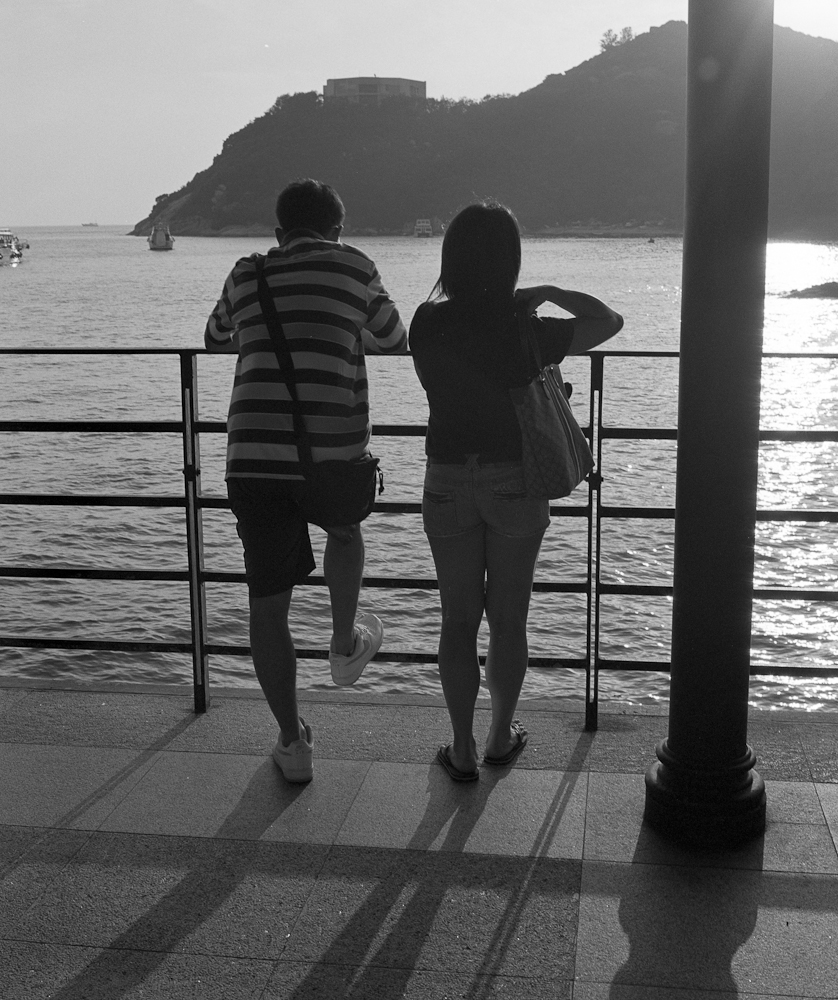
This colonial pier used to be located in the Central business district of Hong Kong Island. It was relocated and now resides in Stanley which is on the south side of the island.


This final installment of the Bessa III review will focus on its unique bellows and Heliar lens. Some sample images from the camera will also be included as requested.

Perhaps the most distinguishing feature of the camera is its collapsible bellows. But unlike a large format camera, the Bessa III bellows only allow the camera to be more compact and does not enable any tilt shift effects. (An interesting experiment would be to unhinge and shoot the lens in a non-perpendicular position to the film plane.) With the bellows collapsed the camera can fit in any large coat pocket or side pocket of your bag for easy access. It is very secure so no worries about it opening or closing accidentally.
Both the aperture dial and focus ring on the lens turn smoothly. The focus tab is comfortable to use even for large sized thumbs. The aperture ring is notched so that it’s easy to locate and turn. The numbers on the aperture dial are large enough to be seen through the viewfinder. This enables the shooter to keep their eye on the subject without removing it from the viewfinder to check aperture and shutter settings. And with a viewfinder magnification of only 0.7x it is close enough to 1:1 to keep both eyes open without much disorientation.
As for the lens, I must admit I have some mixed feelings about it. In optimal lighting conditions the optics yield wonderful results. With the correct focus setting the images are very sharp and crisp. However, in poor lighting conditions the contrast is quite low but nothing that can’t be fixed with some post processing. From this table you can see that the Bessa III’s 80mm Heliar lens is equivalent to a lens somewhere between 35 and 50mm on a 35mm camera. As mentioned previously it does feel a lot wider compared to its 35mm format counterpart. Overall the performance of the lens will allow you to take a wide variety of shots day and night, handheld and with a tripod.
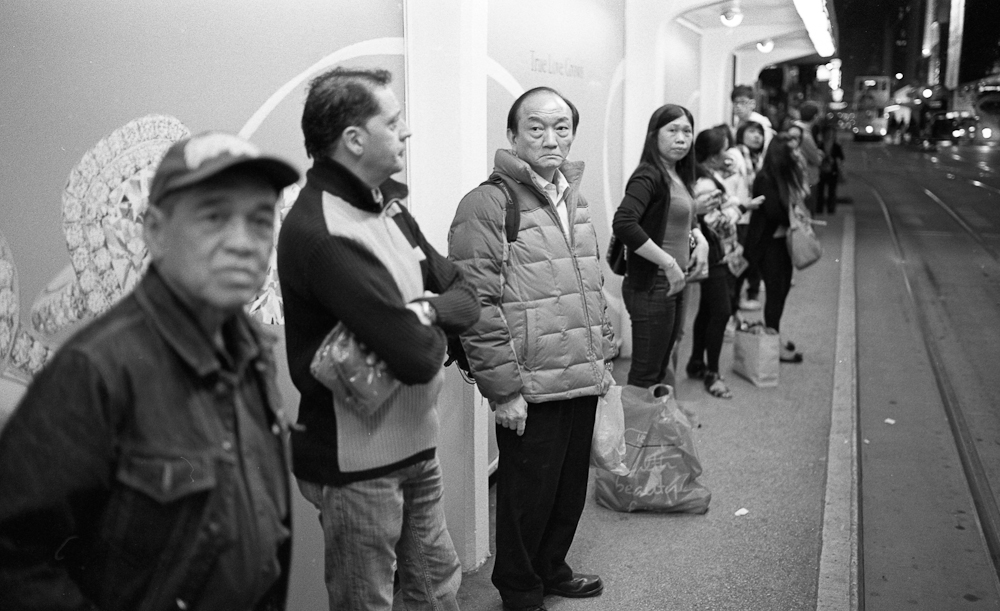
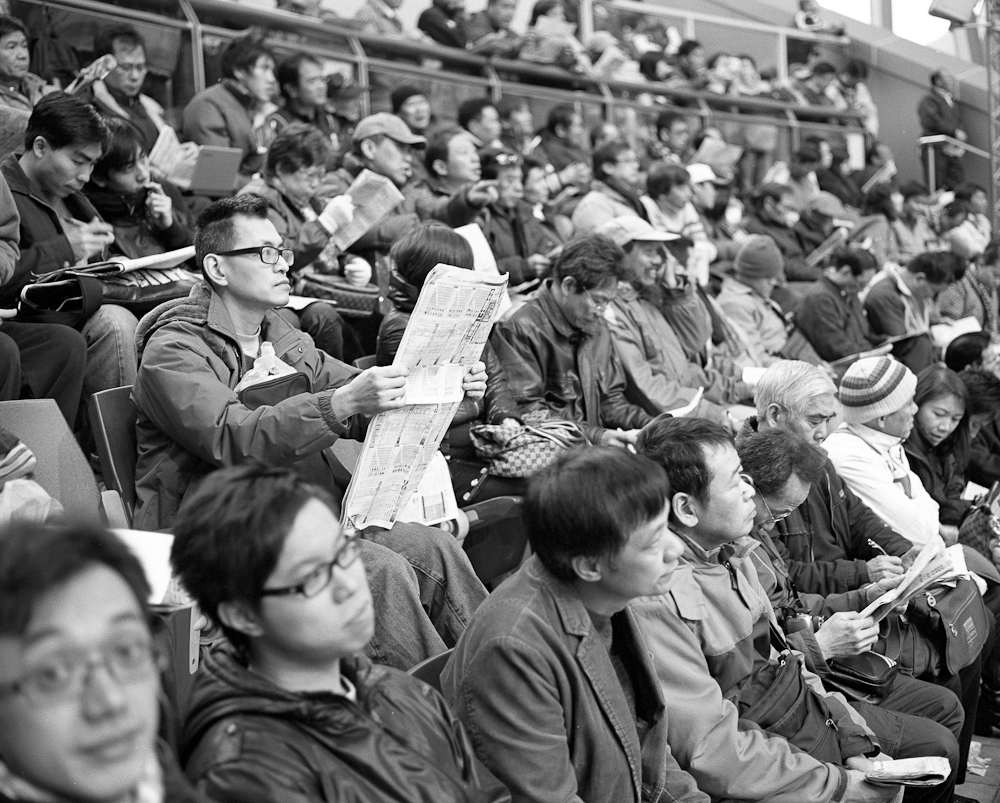
Sample Images from the Bessa III with Heliar 80mm F3.5 Lens

High contrast handheld outdoor day shot with Bessa III

Low contrast handheld indoor shot with Bessa III
For all the Bessa III related post including photos taken with the camera please click here.
 Adventures in Photography